|
|
Ferdinandea Isola Ferdinandea / Graham Island / Île
Julia |
|||||||||||||||
|
Tædivm
Homepage
This
page was made possible by the combined effort of diverse members of the
Unrecognised States Numismatic
Society |
FERDINANDEA
ISLAND: Also known as Graham Island, this submerged volcanic
island near Sicily has been historically claimed by a number of countries,
including The Kingdom of the Two Sicilies, Great Britain, Spain and France. Volcanic activity at Ferdinandea was first reported
in the region during the First Punic War (264-241 B.C.), and the island has
appeared and disappeared four or five times, during which eruptions raised it
above sea level before erosion eventually caused it to submerge again. Since
the 17th century several eruptions have been reported. Ferdinandea, sometimes
referred to as “L'isola che non c'è più” (“The island that is no more”), is
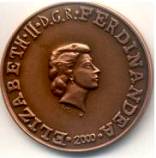
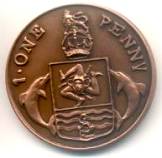
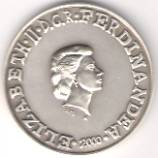
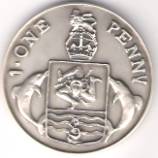
currently a seamount — dozens of which dot the floor of the Mediterranean. When Ferdinandea last sprouted from the water in July of 1831, its appearance was as much a political event as a geological one. Observers at the time wondered if a chain of mountains would spring up, linking Sicily to Tunisia and thus upsetting the geopolitics of the region. A four-way dispute over its sovereignty ensued. A British naval party proclaimed the island a part of the British Empire by planting a flag on it, naming the place Graham Island, after the first lord of the admiralty, Sir James Robert George Graham. An island at this strategic point in the Mediterranean — closer to the southern coast of France and Spain than Malta (a British asset) — was of obvious interest to the world's greatest naval power. But the government of the Kingdom of the Two Sicilies became furious at losing a potentially vital base and dispatched a corvette to replace the Union Jack and claim the island for the Bourbon crown, christening it as Ferdinandea, in honor of Ferdinand II. Last on the scene was the French Navy. Hoisting the flag of France on the tallest part of the island, the island was yet again re-christened as Île Julia, for its July appearance. Spain also showed an interest and declared its territorial ambitions. With four claimants, a diplomatic spat broke out. The scene was set for a four-way war which was only averted when the fully-grown island decided to resolve the issue on its own volition, when after six months of volcanic activity the island crumbled on itself and disappeared yet again below the waves, before the issue of its ownership could be resolved diplomatically. Since then, the remains of Graham Island have been referred to as the Graham Bank (or the Graham Shoal), but Italians still call it Ferdinandea. Fresh eruptions in 1863 resulted in the brief emergence of a new islet at the auspicious location before it sank again, devoured by the ocean. Subsequently, the volcano lay dormant for many decades, with its summit just 8 meters below sea level. The insular cause was taken up yet again by the Italians, after signs of volcanic activity in February 2000 prompted a newspaper article on the topic. This article was also to inspire the Italian designer Mr. David Mannucci to mint the Ferdinandea One Penny in 2000. This coin is a private artistic fantasy, realised by the designer as part of his exams as an art student for the Istituto D’Arte Statale di Porta Romana of Firenze. The first batch was minted in 2000, but were quickly sold out. At the urging of Mr. Paz of the USNS, Mr. Mannucci decided to do a limited extra minting for the members of the USNS, using the original dies. Regarding the island itself, the issue
of ownership will probably continue to tease the minds of future politicians
and pretenders, as long as it keeps turning up time and time again like yet another
bad penny... © 2009 Tædivm
/ C.D. Shiboleth. Information and scans courtesy of E.V.M. McCrea, O. Paz, M.
Haseeb Naz and C.D. Shiboleth. Layout thanks to G. Cruickshank / USNS. |
|||||||||||||||